

How Bear Parties Made Me More Comfortable in My Skin
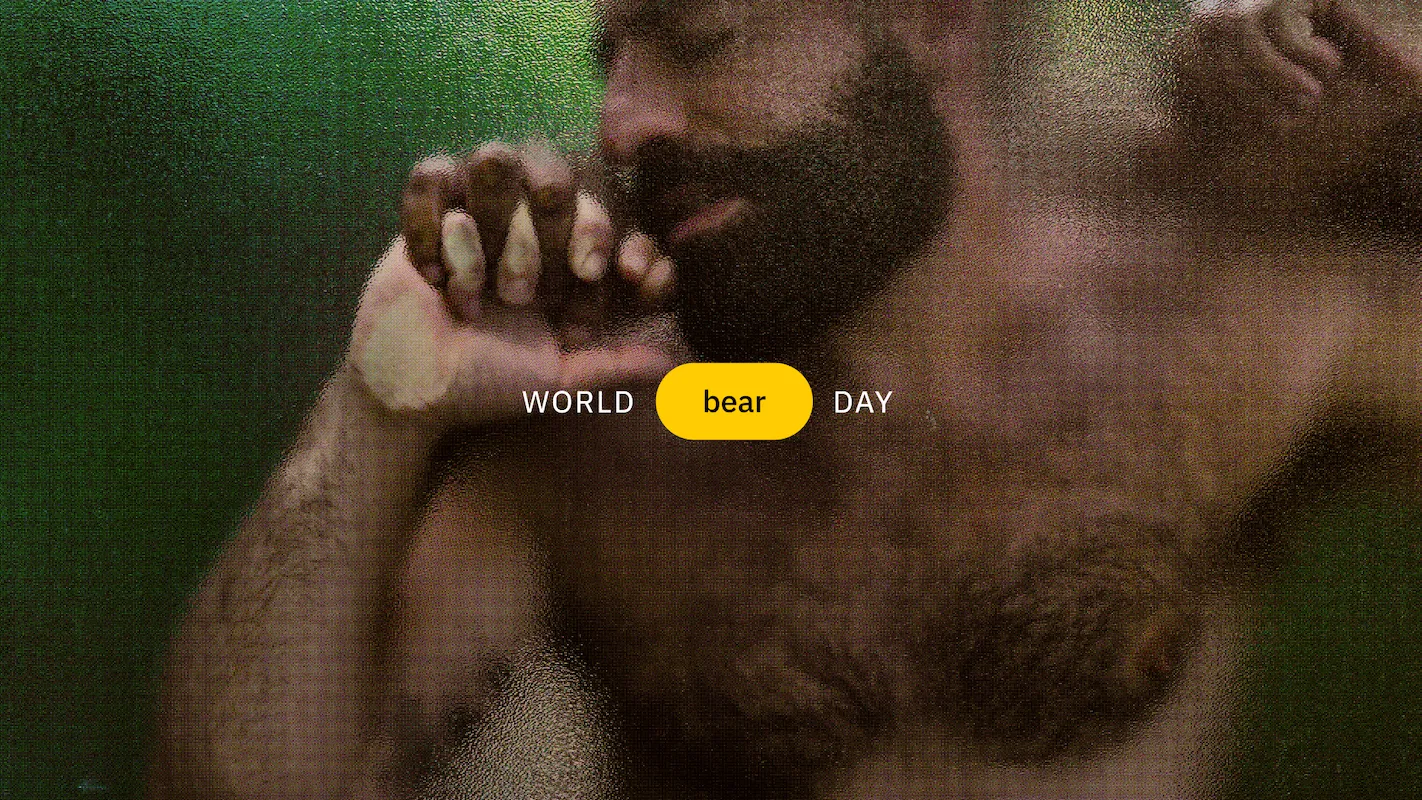

If you’re a queer person who lives in a major metropolitan city, there’s a good chance you’ve explored the nightlife scene. There are a dwindling number of bars to choose from in places like Los Angeles and New York City, but most people quickly learn that not all gay parties are built the same, nor do they always curate a welcoming vibe — and I’ll explain what I mean.
The parties that are thrown at popular gay bars more often than not are inhabited by twinks or muscular jocks looking for the same. Nine times out of 10, the music is the same mix of Top 40 pop hits with slight variations depending on the night. For those who don’t have the ideal slender body type, it’s easy to feel like an outsider, but more importantly, not desired. Most people go to bars to find someone to have an electrifying dance-floor makeout with or to spark up a conversation with a cute guy. When you are constantly getting quietly rejected, the usual train of thought is: Is it me?
I was that person, going out to parties with my friends who identify as twinks or twunks, and they’d easily find someone to form a connection with — leaving me alone by myself, dancing on my own. When you experience frequent rejection in spaces where you aren’t the desired body type, it undoubtedly takes a toll on the way you look at yourself. And in trying to open up about how I felt constantly rejected, I found support from my friends, but they never truly understood how I felt. It felt like a spiral of despair and self-deprivation that only gets worse over time. I’ve only recently started to feel like I've been reframing how I see myself after I started going to bear parties.
Nick Laughlin, the producer of the popular bear party in Manhattan called Goldiloxx, shared a similar story, which led to the creation of his monthly party. He told his friends about the experience he was having at this party, and they tried to comfort him by telling him it was all in his head. He said, “You’ve never been rejected 100 times by someone’s eye contact, so don’t.” Laughlin said he started meeting other bears who felt the same way, and so he decided to throw the first Goldiloxx as a one-off party back in 2022.
A monthly bear party in Manhattan with two floors and two very different vibes. There’s pop music on the top floor with a large dancefloor, and downstairs is more house/electronic music. The demand for the party proved strong, so he continued throwing it. Over the years, he’s grown a connection with the people he’s hosted at the parties, and it’s become a tight circle of friends.
“It’s felt liberating to me to have a bear family, more so now than before when I was just attending them,” Laughlin says. “I feel more confident now that I have a community of bears,” and he’s felt seen how his party has done that for others. At first, he thought this would be a fun side hustle. But he says, “I’d have so many people DM me or they’d come up to me, almost teary-eyed, thanking me for how they haven't felt safe in their bodies at places like The Eagle or thank me for the vibe of the party, and that they really appreciate it.” He says he felt that way, but it was nice to hear from the people attending the party.
When I started going to these parties, I started to feel desired, a feeling I hadn’t felt in a while. I was making out with multiple men in one night — something I haven’t done since my twink days. I was being told how attractive I am. And it’s not that I needed these people to tell me I’m worthy of desire to see it, but it definitely didn’t hurt. I started reframing how I spoke to myself and viewed my body. I focused more on the things I loved about myself (outside the physical) and started giving myself more credit. I’m a great friend, I’m a great listener. I know how to carry a conversation without the help of AI. I’m smart. I’m funny. I am resilient in the face of an unpredictable media industry, where I’m still trying to find my place.
People have their preconceived notions about bear parties because when I tell people I go to these sorts of parties, the first question I always get is: Can people who aren’t bears go? Or I’ll have people tell me, “Oh, I don’t go to those because I’m not a bear,” which is the exact opposite sort of thinking that these spaces are trying to incite, given the exclusion that people in bigger bodies have felt at the gay bar parties in places like West Hollywood in Los Angeles or Hell’s Kitchen.
The word “community” does a lot of heavy lifting in LGBTQ+ spaces because most people use it as a catch-all term to oversell the idea of gay men meeting up to drink and hang out. It’s easy to dismiss the term because it’s become overused and the meaning has been diluted over the years. I never really felt like I had a community here in New York after putting in almost a decade's worth of nights out. As overwrought as the term may be, there is something special about finding community after it’s been thought of as a nebulous concept in my head.
Bearmilk, one of the popular bear parties that’s held at The Deep End on the border of Ridgewood, Queens, and Bushwick, Brooklyn, recently celebrated its ninth birthday. It’s known for being a favorite among the Black and Brown bears that might not want to trek into Manhattan for an event. The party’s organizer, Jorge Mdahaur, says the party was born from seeing the need for spaces that cater to people of color, as it's in a more accessible area, they have a $5-$10 cover compared to other parties’ $30 and up, and the DJs play more hip-hop, rap, and Caribbean music.
“The bear parties nine years ago were mostly attended by white people, Mdhaur says. “I didn’t see any Black or brown people on the fliers, nor did I see a lot of representation for other communities besides just like the white muscle bears from Manhattan.” He goes on to say, “So for me, it was really important [to create Bearmilk] because I wanted to hang out with my friends in these spaces and feel like the space was for us.”
I can speak to my experience growing up a 6’7” tall, Latino, who has always been on the chubbier side, and I’ve always felt like I needed to shrink myself. I never felt worthy of taking up space or making my voice heard. Before puberty, I was always the tallest and meekest in the room. Once I started gaining weight and being seen as unhealthy, and that translated in my head as being unworthy of love, I tried to shrink myself even further by going to the gym often and losing a decent amount of weight to be seen as attractive. I was praised for my weight loss and told I looked healthier.
Of course, the weight returned, and it took me years to unlearn the idea of shrinking myself to make other people happy or comfortable. I credit that to these parties as the switch that turned the lights on in a dark room for me.
That seems to be the case with many of the guests at Mdhaur’s party as well as he tells Grindr, “I just feel this like amazing sense of gratitude and pride because people tell me things like, ‘This was the first time I felt comfortable taking my shirt off in public’ or ‘This is the first time I ever felt sexy.’ That’ll literally make me cry because I relate to that story.”
The importance of these spaces cannot be overstated, because both organizers understand that the clientele inhabiting them should have their questions, comments, and concerns listened to and taken seriously. “I see [my party] as a living organism; it’s my child. It was something that was born, and I take care of it now,” Mdhaur says, so if that means hearing how he could improve from his guests, then so be it.
Laughlin knows that there’s more work to do in the bear party space as a whole, but is happy where things are right now. “I’d say we’re in a good place, we keep doing our thing and making all the muscle boys jealous of our bear teas.”


.jpg)


