

Four Ways Into World Leather Day

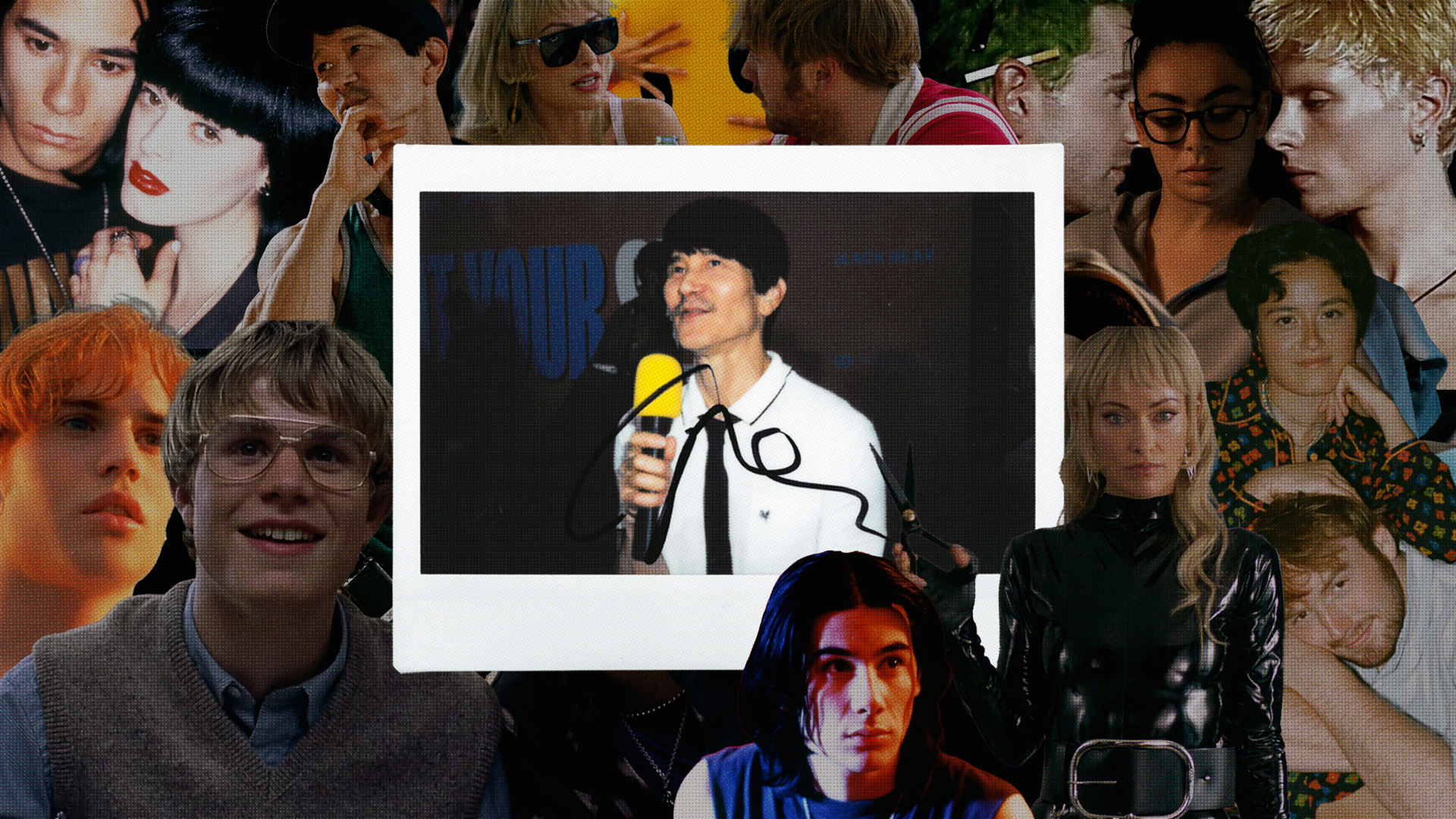
Honey Davenport was 22 and sipping on $5 frozen margaritas at a bar named Rawhide, in Chelsea, when they witnessed queer leather culture for the first time. David Alcocer was in his "baby gay" era, clutching a PSP, when he saw a Tom of Finland drawing. (Admiring art through a PlayStation Portable device, as all artists dream of.) Lady Camden, raised in London's Camden Town among goths, punks, and outsiders, understood what leather really meant to queer people after moving to San Francisco. For Yves Mathieu East, seeing Lenny Kravitz on MTV was enough for him to start coloring his Wranglers black, with Sharpies, attempting to recreate a leather look that he couldn't afford.
Do all paths lead to leather? Not necessarily, but queer people and leather have a long history that started during a period of censorship, propaganda, and war. I'm talking about the 1940s, to be clear!
Over time, leather culture evolved into fantasy, fetish, and fashion, and also into a community bonded by friendship, fun, and freedom. Today, we celebrate World Leather Day by highlighting personal stories and understandings of a community often flattened into stereotypes.
Alcocer, a model and content creator best known as @dombeeef, recalls seeing a specific Tom of Finland drawing on his PSP while searching the web for "sexy men." Thinking back, he says: "I didn't know how deep it went…I just thought, That's hot."
East — an artist, model, and activist — recalls pop music moments as his earliest memories of recognizing leather as a striking aesthetic. Beyond clothes, he was struck by the transformation. So, within his means, East improvised.
"I grew up pretty poor. But, to me, I didn't think I was poor," he says. "If I had a pair of Starter jeans or Wrangler shorts, I would either attempt to paint them black, or color it with Sharpie to make it black, give it a more grungy kind of look and feel."
"It never came close," East admits. "But to me, in my head, as a kid, it was so close to it that I was like, You can't tell me that I'm not Lenny Kravitz. You can't tell me that I'm not Madonna." And that's on period, honestly.
Lady Camden's introduction to leather wasn't an image, but a whole environment. Before moving to San Francisco and competing on RuPaul's Drag Race season 14, she grew up surrounded by counterculture. "People would come to Camden to find community with other people that also felt this way," she says of her North London hometown, "and needed to sort of express themselves in a way that might seem kind of threatening and scary from afar…but they were always the nicest people to me."
That reputation — gentle people in intimidating gear — comes up in all my conversations about leather culture. Alcocer recalls attending International Mr. Leather for the first time and stepping outside into a smoking area. "You get into conversations with these people. They're the sweetest. There's no ego." He laughs at the cliché but stands by it: "Nine times out of ten: teddy bear."
That softness isn't incidental, Davenport muses. The musician, entrepreneur, Drag Race season 11 alum, and current Mr. Palm Springs Leather describes themself as a "leather drag queen DJ" and credits their leather father, Wil Wever, for introducing them to this community. "In a world that often feels so dangerous to be a drag performer…he made it comfortable for us to exist," Davenport recalls. "Wherever he was, we knew we were safe."
Davenport also rejects the idea that drag and leather are separate worlds. "Leather has always been drag, and drag has always been a kink. They are one and the same. Everything about gender is a performance."
Camden sees it similarly. Leather can be "a new skin that you wear," she says, having seen gentle friends completely changing after putting on a harness. "I see this new freedom in their face unlock. They feel really comfortable, really badass, and really safe."
Queer leather culture originated after World War II. Gay men, including veterans, built motorcycle clubs, bars, and venues that defied respectability politics. Those spaces weren't perfect or universally welcoming, but allowed enough queer people to gather, create their own rules, and find safety.
Camden points to the AIDS crisis of the 1980s, when "the leather community and the lesbian community really…stepped in." These initiatives offered "food delivery to people that couldn't go out and get their own," as well as "medication delivery, massage therapy. So many things that…make someone feel like a human being while healing and trying to get better." Meanwhile, politicians didn't consider "queer people who were sick as something that they prioritize in helping or supporting."
Alcocer likes that the community keeps reclaiming symbols of authority. "There's this homage to gay history. Leather in police uniforms, army uniforms. It's taking these hypermasculine things, seen as only for straight people, and making them ours."
The work required to make leather feel like home isn't finished. East notes that "people are afraid to admit how white-centered and white-oriented a lot of these spaces are…It's always geared towards whiteness as the center of what makes it attractive."
Davenport had similar experiences early on. "I didn't even see myself in the leather community, coming up, because it looked so white to me." Things changed when Davenport found Onyx and met titleholders who expanded their sense of what leather can look like.
"My first leather hat was a beret because of the Black Panther," Davenport says. "That was a visual reference — of it being Black — that I could bring to my leather, and it still fit into protocol."
Camden owns harnesses in pastel blue and white. Davenport pairs their favorite Chippewa boots, gifted by a mentor, with everything: from gowns to jockstraps. Alcocer's favorite leather look is "leather chaps with boots, and a thong." East now wears chaps "even when I'm not riding horses," adding: "If someone's like, 'Hey, we're having this birthday dinner for this person's 60th.' I'm like, 'I'm wearing chaps.'"
Davenport, East, Camden, and Alcocer share a clear perspective that leather isn't just toughness and fetish. It can be a costume, a code, a story, a flirtation, a protest, and even a family tree.
So cheers to that, fam. Happy World Leather Day to those who celebrate.






.jpg)


