

Asia's Marriage Equality Movement Is Gaining Momentum
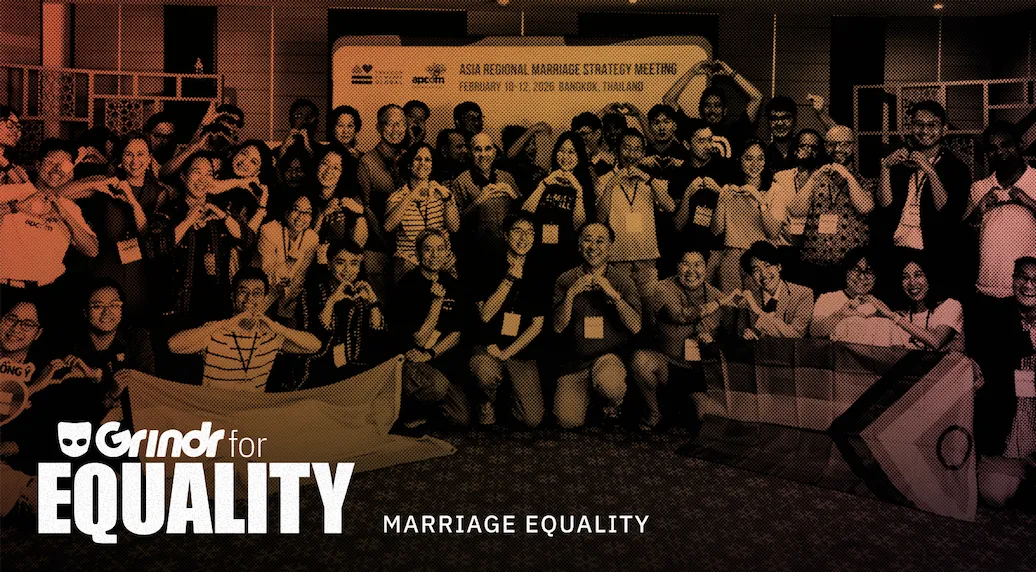

Across Asia, the movement for marriage equality is entering a new phase.
For decades, advocates fought for legal recognition of same-sex couples through constitutional challenges, hostile referendums, and grinding legislative campaigns. Three countries have now won that fight — Taiwan, Thailand, and Nepal. Their victories have energized activists across the region.
Last month, that momentum came into focus through two gatherings highlighting both the strategy and human stories driving the movement: a regional strategy meeting in Bangkok and a Valentine’s Day event in Tokyo.
Charting the Path Forward for Marriage Equality in Asia
Last month, Grindr for Equality partners Freedom to Marry Global and APCOM, convened the 2026 Asia Regional Marriage Equality Strategy Meeting in Bangkok. More than 50 advocates traveled from Bhutan, Hong Kong, Japan, Mongolia, Nepal, the Philippines, Singapore, South Korea, Taiwan, Thailand, and Vietnam.
The presence of three marriage equality countries in Asia has fundamentally changed the conversation. Victories in Taiwan, Thailand and Nepal offer proof that fights for equality can succeed in Asian societies, and across the region, progress is mounting.
In the past two years:
- More than 26,000 same-sex couples have been married in Thailand since equality was achieved in early 2025
- Five of six Japanese High Courts ruled that marriage inequality is unconstitutional.
- Vietnam recorded 63% public support for same-sex marriage.
- South Korea included same-sex couples in its national census.
- The Philippine Supreme Court ruled that same-sex couples can legally co-own property
None of these developments happened by accident.
For three days in Bangkok, advocates shared legal strategies, campaign tactics, and lessons learned from their own countries. Many organize in environments where openly advocating for LGBTQ+ rights carries risk or where nationalist and opaque political systems add pressure.
Yet breaking down the steps help demystify the process: recruit volunteers, find families willing to share their stories, build coalitions of lawyers and civil society organizations, identify political allies and map pathways to change.
As Freedom to Marry Global campaign strategist Cameron Tolle told the room: "If we don't chart the path to winning, then who will?"
One moment captured the spirit of the movement. During a fundraising session, participants were asked to call someone in their lives who could be a potential donor. One advocate called their grandmother, a relationship that has been strained since they came out. She not only agreed to donate but promised to spread the word in her rural hometown. The room erupted in tears.
Japan: A Movement at a Turning Point
Japan is at a critical juncture. Five of six regional High Courts have ruled the country’s same-sex marriage ban unconstitutional, but the Tokyo High Court ruled the opposite in November 2025, creating tension ahead of a Supreme Court decision expected within the next year. At the same time, Prime Minister Sanae Takaichi, elected in October 2025, opposes same-sex marriage and leads a government in which conservative nationalist sentiment is rising.
Yet public support for marriage equality in Japan sits at around 70%. The gap between public opinion and the law remains enormous. Closing it will require not only litigation but a mobilized community unwilling to let the issue fade from the political agenda.
On February 14, Marriage for All Japan marked the seventh anniversary of its first affiliated marriage equality lawsuit with a Valentine’s Day event at Aisotope Lounge in Shinjuku Ni-chome, Tokyo’s LGBTQ+ district. The event premiered two documentaries produced with Grindr for Equality’s support: We Visited Countries Where Same-Sex Marriage Is Legal!
The films were designed to make marriage feel personal rather than abstract, showing how couples in Thailand and Taiwan are already building married lives and inspiring Japanese gay/bi men to imagine the possibility for themselves.
After the screenings, Japanese Hiroya and his Taiwanese husband Daniel, gogo performers who married in Taiwan last year, described the reality of living in Japan where their marriage is not recognized: immigration complications, expired notarized documents, and a hospital that turned Hiroya away during Daniel’s medical emergency. Asked what marriage means to him, Daniel answered simply: “Legal validation of love across borders.”
About 80% of attendees reported feeling a strong personal connection with the couples featured in the films. Several were visibly moved to tears.
As one couple featured in the Taiwan documentary put it: “Marriage is the beginning of a happy story.” For Japan’s LGBTQ+ community, that beginning is still being fought for — and gatherings like this help keep the fight alive.
Grindr: From Connection to Commitment
Spending time with these communities is a reminder that long before laws change, movements are sustained by people caring for one another and refusing to give up.
As the world’s largest platform for gay, bi, trans and queer people, Grindr believes the freedom to connect must be matched by the freedom to build a life together under the law.
That is why Grindr for Equality supports organizations like Freedom to Marry Global and Marriage for All Japan, helping build the legal strategies, peer networks and cultural momentum needed to expand marriage equality across Asia.
Marriage equality is about far more than two people coming together. When same-sex couples are recognized under the law, it opens space for LGBTQ+ people to live more fully in society — shaping adoption rights, healthcare access, immigration protections and the simple dignity of being recognized as a family.
With three countries already recognizing marriage equality, the question is no longer whether change can happen in Asia. The question is how quickly that momentum will spread.







.jpg)


