

How Survivor Became Gay Sports
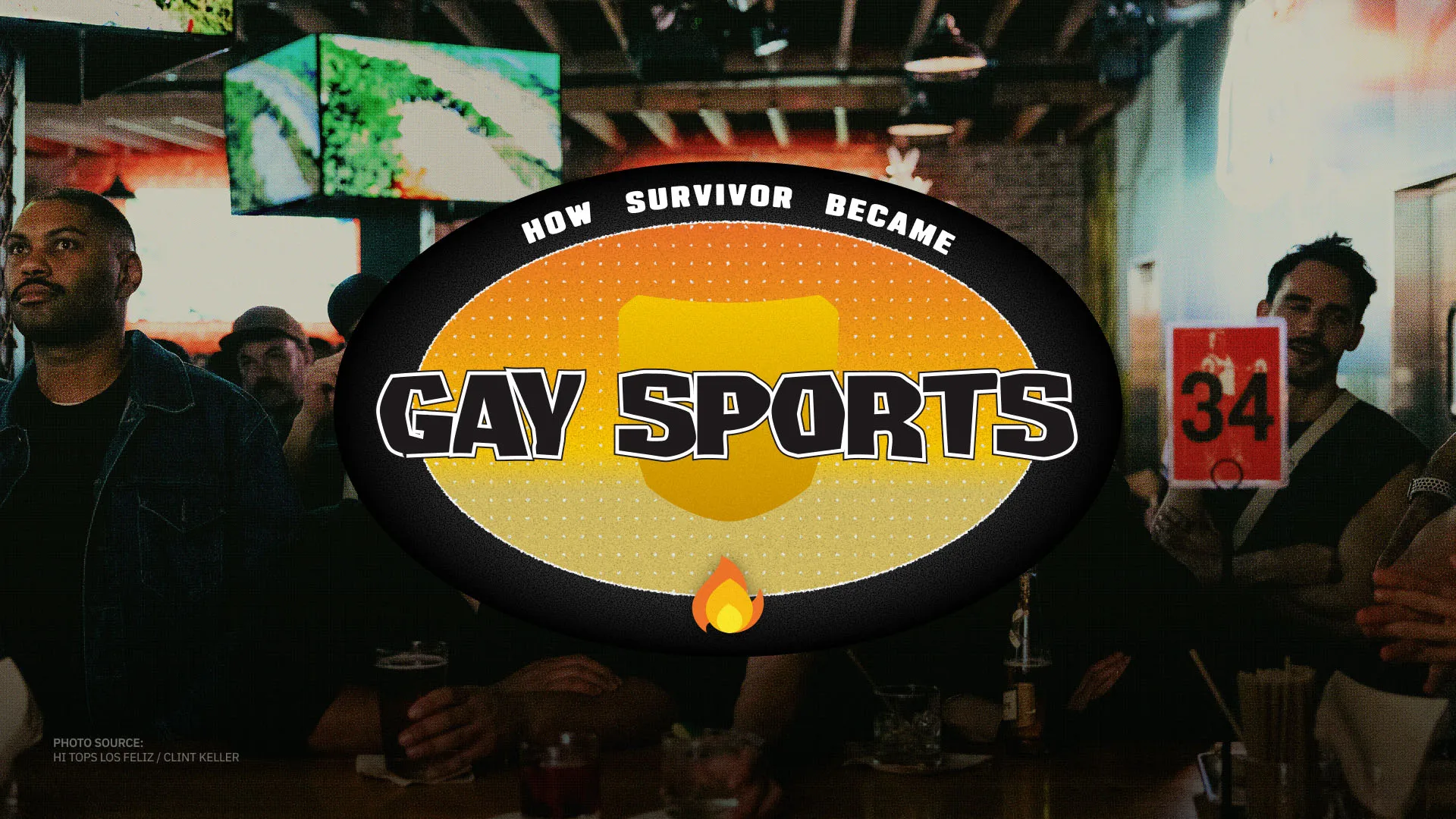

For decades, heterosexual America has held an unfair monopoly over drunkenly yelling at bar televisions.
This conceit is something generally understood as “sports,” occurring primarily at the “sports bar” — familiar constructs, to be sure, but not particularly known for their embrace of the queer community. If anything, many of these spaces and their offshoots (see: gym class, varsity games, masculinity overall) can catalyze a young queer person’s sense of exclusion and otherness. An inability to discuss “the big game” or, worse, the perceived social obligation to care about said big game when you’d much rather be talking about the Born This Way music video run is a common ground many of us share when we look back on our adolescences, that horrible period of discovering you might be different.
The past few years, though, have shown some remarkable developments in the queer community’s reclamation of this space, with a central force that might look unlikely on paper: CBS’s pioneering reality juggernaut Survivor.
Since the show’s quarantine-era resurgence, during which many people (myself included) voraciously speedran the show’s then-forty seasons, it has ignited a cultural frenzy not seen since its early days, when families nationwide gathered weekly to watch a nefarious, nude gay man terrorize his castmates, winning $1M for doing so. But this time around, people aren’t watching at home; they’re hitting the bars.
Neil McNeil, who hosts a hugely popular watch party at Los Angeles gay sports bar Hi Tops Los Feliz, was a barback when he first heard of plans to play the show back in 2024. That was at the beginning of season 46, well into the show’s post-2020 “new era.”
“This is going to be major,” McNeil remembers thinking when management mentioned customers’ email requests to play the show. This sort of communal viewing was hardly new for the bar — Drag Race viewing parties had been a mainstay since its 2023 opening, as were traditional sports — but Survivor fans are a different breed. He had the idea of hiding an “idol” in the bar, mimicking the show’s iconic Hidden Immunity Idol mechanic where players can find producer-planted trinkets and play them to spare themselves. The Hi Tops iteration of the idol would net its finder a free shot.
“Just trust me on this,” he’d told management.
Someone found that idol early in the night, and most everyone thought nothing of it. And then something exciting happened: “The next week, people started showing up [asking] ‘is the idol hidden yet?’” shares McNeil, who took this as an opportunity to swing for the fences, spinning this interactive component into a weekly idol hunt, puzzle competitions mimicking the show’s challenges, and eventually, a fantasy league which now spans both the bar’s Los Feliz location and its original West Hollywood spot.
“The people who watch Survivor take that shit seriously,” says Michael Swan, who hosts the West Hollywood parties. “They’re debating strategy in the commercial breaks.”
Swan and McNeil share the sentiment that Survivor is a markedly different experience from the Drag Race watch party, the clearest “gay sports” forebearer. Where those parties are largely a passive experience, a formalized pregame ahead of a Friday night outing, Survivor is a uniquely active one, a dynamic McNeil attributes to the fact that “anything could change at the drop of a hat” in the game. (Judging by season 50’s chaos thus far, he’s absolutely right.)
If you’re wondering what it is about this show specifically that captivates queer audiences, you’re not alone. Even host Jeff Probst is confounded by this, per a reported exchange cut from season 48 in which he appears baffled at any connection between the show and gay culture.
Everyone I spoke with for this piece also didn’t have a firm answer, though some trends generally emerged: its grand characters, especially its divas; the high drama, which some might dub camp; hot, muscular men barely clothed on the beach.
“I always think about the quote from Unbreakable Kimmy Schmidt where Titus says, ‘That was all smoke and mirrors, Kimmy, two things gay men love,’” offers Sam Stanish, who cohosts the Bitter Jurors podcast and produces the Fruity Island watch party in Brooklyn.
“The show gives itself over to queer sensibilities because the women on the show are either iconic…or invisible. Only a gay person would look at somebody with zero confessionals and be like, she’s my favorite contestant of all time,” he adds, alluding to Kelly Shinn’s infamous “purple” edit on the Nicaragua season. “You can’t have Star Updates [a popular Twitter account dedicated to season 48’s underedited Star Toomey] if it’s a straight fanbase.”
Past the divas — which Survivor boasts in spades — there is also a more elemental appeal at play here. Declan Zhang, who (fittingly) hosts the podcast Gay Sports, identifies this as such: “A lot of us have had the experience, before we were around a lot of other gay people, of having to monitor ourselves and learn how to present the right version of ourselves, to be palatable and work our way to the top of a social hierarchy.”
It’s a sentiment I heard some variation on from everyone I spoke to: there’s an undeniable parallel between the performances we have to do as queer people and the performative elements of Survivor. McNeil named the “alliances” he built with the popular girls in grade school as a touchpoint for the show’s alliance structure. Swan leaned on the show’s emphasis on community and outsiders, especially given the show’s early penchant for casting macho men who were often outright homophobic or transphobic.
Not that Survivor is some weepy, trite affair (although season 50’s nostalgic tearjerker opening montage might suggest as such). Rather, it’s a show that encourages the sort of investment we see from sports fans, so that all the backstabbing and manipulating feels like it matters.
“I turn into a bit of a bro during challenges,” says Zhang. “My beer is sloshing around in my hand, and I’m cheering and yelling at the screen. It’s awesome.”
They're not the only one. All across the bar, so is everyone else.





.jpg)


