Search articles by title

Filter articles by category

This is some text inside of a div block.
Showing 0 results
of 0 items.
highlight
Reset
Grindr For Equality

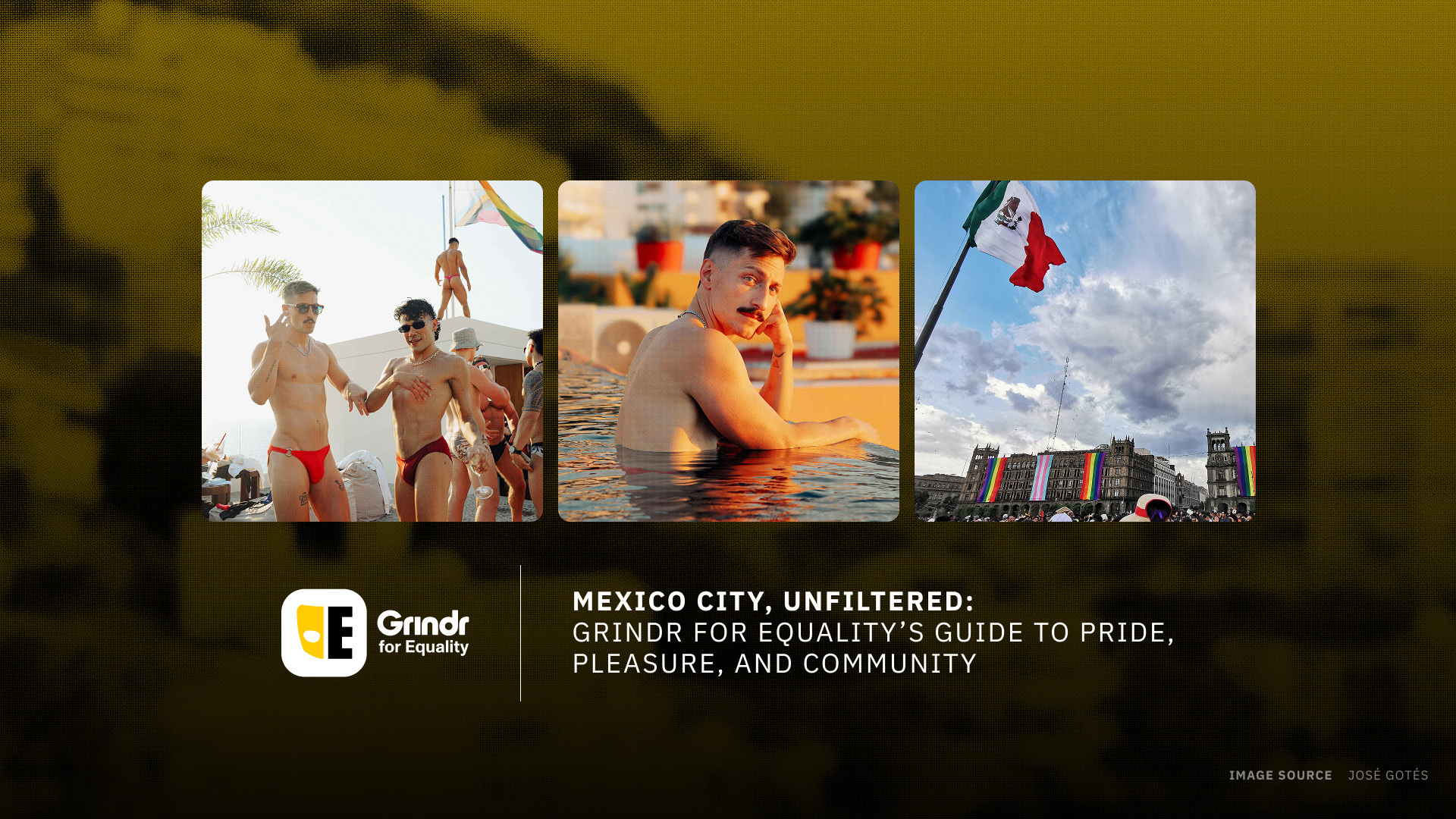
Ciudad de México sin filtros: La guía de Grindr for Equality para celebrar el Mes del Orgullo, el placer y la comunidad (Parte 1)

En el Mes del Orgullo, Grindr se dirige a México para celebrar junto a las comunidades LGBTQ+ del país. Para conmemorar la ocasión, compartimos una edición especial de nuestro blog dedicada a México y a todo lo que hay por descubrir más allá de los lugares habituales. Parte guía de viaje y parte recurso comunitario, esta edición, desarrollada junto con nuestros aliados de Grindr for Equality, reúne consejos de seguridad dentro de la app, recomendaciones locales y organizaciones que apoyan a las personas LGBTQ+ en todo el país. Desde lugares para relajarte y recargar energías hasta espacios donde conectar, bailar, explorar y celebrar, esta guía está diseñada para ayudarte a descubrir y disfrutar aún más de todo lo que México tiene para ofrecer.
10
min. read

Este verano, México recibe al mundo. El Mes del Orgullo llena las calles de color. Los bares están llenos, los estadios están a su máxima capacidad y, en algún lugar, alguien se está enamorando entre tacos al pastor a las dos de la mañana.

Porque si algo caracteriza a la Ciudad de México, es que aquí nada se vive a medias.

Más allá de los lugares que aparecen en cualquier guía turística, esta ciudad está llena de espacios donde generaciones de personas LGBTQ+ han construido comunidad, encontrado amistades, vivido romances y creado redes de apoyo. Para esta guía, conversamos con algunas de las organizaciones aliadas de Grindr for Equality en México – como Trevor Project México, Inspira Cambio, Clínicas Especializadas Condesa y MOVii – para descubrir sus recomendaciones: desde dónde comer, bailar y explorar, hasta dónde encontrar servicios de salud sexual, atención afirmativa para personas trans y apoyo emocional cuando se necesita.

Porque cualquier aventura se disfruta más cuando sabes que también hay una comunidad que puede acompañarte.

Encuentra comunidad 🌈

Ya sea que viajes por tu cuenta o quieras conectar con personas locales, Trevor Project Mexico nos comparte algunos de los espacios comunitarios que han ayudado a generaciones de personas LGBTQ+ a encontrar comunidad, apoyo y un sentido de pertenencia.

Manos Amigues

Un punto de encuentro que fusiona centro comunitario, espacio cultural y red de apoyo mutuo. Alex Lara, consejero de Trevor Project México, recomienda explorar su agenda cultural: "Puedes encontrar conciertos, lecturas de poesía, eventos de ballroom o exposiciones temáticas en su galería de arte, todo dentro de un espacio seguro, inclusivo y afirmativo."

Dirección: Pedro Moreno 113, Guerrero

Revuelta Queer House

Un espacio que combina bar-terraza y galería de arte queer, abierto desde la mañana hasta la noche. Lara lo recomienda por ofrecer: "Un ambiente que celebra todas las identidades con una terraza perfecta para comenzar la noche con una buena bebida."

Dirección: Puebla 94, Col. Roma Norte, Alcaldía Cuauhtémoc

Somos Voces

La librería LGBTQ+ más grande de América Latina. Somos Voces reúne literatura queer, cafetería y un foro cultural que regularmente alberga presentaciones artísticas, talleres y encuentros comunitarios.

Dirección: Niza 23, Juárez, Cuauhtémoc

Cultura y arte 🎨

Para Inspira Cambio, la cultura es mucho más que entretenimiento: es una herramienta para la comunidad, para expresarse libremente y fortalecer el bienestar colectivo. Sus recomendaciones nos llevan por museos, espacios artísticos y eventos públicos donde se preservan las historias LGBTQ+, se celebran las distintas formas de identidad y las personas se encuentran a través del arte y la creatividad.

Museo de Arte Transfemenino

Dedicado a preservar la memoria de las comunidades trans en México, este museo reúne fotografías, archivos, obras de arte y objetos personales que narran décadas de historia, resistencia y construcción de comunidad.

Dirección: Dr. Andrade 24, Doctores, Cuauhtémoc.

Museo Universitario del Chopo

Conocido por generaciones como uno de los epicentros de la contracultura en la Ciudad de México, El Chopo ha sido durante décadas un refugio para la creatividad queer, las expresiones artísticas alternativas y las identidades que desafían las normas tradicionales.

Dirección: Dr. Enrique González Martínez 10, Santa María la Ribera

Noches de Museos (Museum Nights)

El último miércoles de cada mes, museos de toda la ciudad extienden sus horarios y abren sus puertas a conciertos, recorridos especiales, presentaciones artísticas y actividades culturales que transforman la experiencia de visitar estos espacios.

Ubicación: Centro Histórico, Roma y Juárez

Sonideros en la Alameda Central

De jueves a domingo, la Alameda Central se convierte en una enorme pista de baile al aire libre. Diversos colectivos instalan sistemas de sonido para compartir clásicos de la cumbia y la salsa, una tradición popular que recientemente fue reconocida como Patrimonio Cultural Intangible de la Ciudad de México. No importa si nunca lo has bailado: basta con acercarse y dejarse llevar por la música.

Ubicación: Plaza de Bellas Artes y Kiosco de la Alameda

💡 Genera más confianza dentro y fuera de la app con la función "Taken on Grindr", que te permite verificar tu identidad tanto en tu perfil como en tus conversaciones.

Actívate y descubre otros espacios de encuentro 💪

Clínicas Especializadas Condesa nos recuerda que algunos de los espacios de encuentro LGBTQ+ más importantes de la Ciudad de México no son bares ni clubes. Desde las barras de ejercicio sobre Insurgentes hasta los senderos de Chapultepec, estos lugares han sido escenario de encuentros, amistades y comunidad para generaciones de personas LGBTQ+ en la vida cotidiana de la ciudad.

Bosque de Chapultepec

El pulmón verde de la Ciudad de México. Recorre sus senderos, renta una lancha en el lago, visita alguno de sus museos o simplemente disfruta observando el ritmo de la ciudad bajo la sombra de los árboles. Y no dejes de visitar la Casa del Lago, uno de los espacios culturales más emblemáticos del parque.

Barras de ejercicio de Insurgentes

Equipos de calistenia al aire libre, visitantes habituales y un ambiente sorprendentemente social convierten este lugar en uno de los puntos de encuentro más singulares de la ciudad.

Descubre más sobre las iniciativas y campañas de Clínicas Especializadas Condesa en sus redes sociales aquí.

Después del atardecer: saunas y espacios de encuentro ♨️

Para muchas personas LGBTQ+, los baños y saunas siguen siendo espacios donde el placer, la exploración y la comunidad conviven – y un recordatorio de que el placer y la salud sexual pueden ir de la mano.

💡Ya sea que estés explorando la vida nocturna de la ciudad, visitando un sauna o conociendo a alguien nuevo, recuerda que servicios como PrEP, PEP, pruebas de VIH y atención en salud sexual están disponibles a través de Clínicas Especializadas Condesa.

SODOME Bathhouse

Uno de los baños y saunas gay más conocidos de la Ciudad de México que combina el ambiente social de un club con las comodidades de un sauna moderno. Distribuido en varios niveles, cuenta con vapor, áreas de descanso, bar, eventos temáticos y espacios diseñados para relajarse y conectar con otras personas.

Dirección: Calz. Gral. Mariano Escobedo 716-A, Anzures

Baños Finisterre

Menos sofisticado y más local que algunos de los espacios más recientes de la ciudad, ha construido una comunidad fiel gracias a su ambiente clásico, sus áreas de vapor y sauna, los servicios de masaje y una personalidad muy propia de la Ciudad de México.

Dirección: Manuel María Contreras 11, San Rafael

Cuando cae la noche: bares y vida nocturna 🍹

Cuando preguntamos a Trevor Project México, Clínicas Especializadas Condesa e Inspira Cambio dónde cobra vida la comunidad LGBTQ+ al caer la noche, sus recomendaciones nos llevaron a dos de las zonas más emblemáticas de la vida nocturna de la ciudad: Zona Rosa y República de Cuba. Juntas forman el corazón de la vida nocturna queer de la Ciudad de México y el punto de partida perfecto para una noche que quizá termine muy distinta de cómo comenzó.

💡 ¿Vas a conocer a alguien nuevo? Funciones como Ocultar Perfil, Modo Incógnito y la Videollamada dentro de la app te permiten conectar con mayor confianza y en tus propios términos.

Vaqueros Bar

Una de las experiencias nocturnas más singulares de la ciudad. Piensa en cumbia, música norteña, baile en pareja, vaqueros, osos y muchas oportunidades para conocer gente. Los martes y jueves ofrecen populares clases de cumbia que atraen tanto a principiantes como a habituales.

Recomendado por: Trevor Project MX 

Dirección: Florencia 35-B, Juárez (Zona Rosa) 

El Almacén

Un bar de cruising con una estética retro que evoca una época clásica de la vida nocturna gay en la Ciudad de México.

Recomendado por: Clínicas Especializadas Condesa

Dirección: Florencia 37-B, Juárez (Zona Rosa) 

La Malagueña

Parte cantina, parte experiencia cultural. Aquí encontrarás mariachi, música tradicional en vivo y un ambiente vibrante que captura el espíritu del Centro Histórico de la Ciudad de México.

Recomendado por: Inspira Cambio

Dirección: Eje Central Lázaro Cárdenas 10, Centro Histórico / República de Cuba

En el Mes del Orgullo, Grindr se dirige a México para celebrar junto a las comunidades LGBTQ+ del país. Para conmemorar la ocasión, compartimos una edición especial de nuestro blog dedicada a México y a todo lo que hay por descubrir más allá de los lugares habituales. Parte guía de viaje y parte recurso comunitario, esta edición, desarrollada junto con nuestros aliados de Grindr for Equality, reúne consejos de seguridad dentro de la app, recomendaciones locales y organizaciones que apoyan a las personas LGBTQ+ en todo el país. Desde lugares para relajarte y recargar energías hasta espacios donde conectar, bailar, explorar y celebrar, esta guía está diseñada para ayudarte a descubrir y disfrutar aún más de todo lo que México tiene para ofrecer.
Grindr For Equality

Mexico City, Unfiltered: Grindr for Equality’s Guide to Pride, Pleasure, and Community (Part 1)

This Pride Month, Grindr is heading to Mexico to celebrate alongside the country's LGBTQ+ community. To mark the occasion, we're sharing a special edition of our blog dedicated to Mexico and beyond. Part travel guide and part community resource, this edition—developed alongside our partners from Grindr For Equality—brings together in-app safety tips, local recommendations, and organizations that support LGBTQ+ people across the country. From places to relax and recharge to spaces where you can connect, dance, explore, and celebrate, it's designed to help you experience more of what Mexico offers.
11
min. read

This summer, Mexico is hosting the world. Pride is taking over the streets. The bars are packed, the stadiums are full, and somewhere right now, someone is falling in love over tacos al pastor at 2 a.m.

Mexico City doesn’t do anything half-heartedly. 

Beyond the typical tourist hotspots, explore where generations of LGBTQ+ people have connected, flirted, built friendships, and created community in one of the world’s most vibrant queer capitals in this two-part blog series. For this part travel guide and part community resource, we asked some of Grindr for Equality’s partners in Mexico – Trevor Project Mexico, Inspira Cambio, Clinicas Especializadas Condesa, and MOVii – to share their version of the city—from favorite places to eat, explore, dance, and recharge to trusted resources for sexual health, gender-affirming care, and emotional support. Because every adventure is better when you know where to turn if you need help.

Find Queer Community 🌈 

Whether you're traveling solo or looking to meet locals, Trevor Project Mexico points us toward the community spaces that have helped generations of LGBTQ+ people find belonging.

Manos Amigues

Part community center, part cultural space, part mutual aid hub. Alex Lara, a counselor at The Trevor Project, recommends checking "their cultural events calendar, where you can find live music, poetry readings, ballroom events, or themed exhibitions in their art gallery—all within a safe and affirming space."

Address: Pedro Moreno 113, Guerrero

Revuelta Queer House

A rooftop bar and queer art gallery open from mornings to nights. Lara recommends visiting for "an atmosphere that celebrates all identities, and a terrace serving the perfect drinks to ease into the evening.”

Address: Puebla 94, Col. Roma Nte., Alc. Cuauhtémoc

Somos Voces

The largest LGBTQ+ bookstore in Latin America, Somos Voces combines queer literature, a café, and a cultural forum that regularly hosts community gatherings.

Address: Niza 23, Juárez, Cuauhtémoc

Get Cultured 🎨

For Inspira Cambio AC, culture is more than entertainment—it's a tool for community, self-expression, and collective wellbeing. Their recommendations highlight the museums and artistic spaces where people come together through art, performance, and culture.

Museum of Transfeminine Art

This museum preserves the history, memory, and resistance of Mexico’s trans communities through photography, archives, artwork, and personal belongings from the twentieth century.

Address: Dr. Andrade 24, Doctores, Cuauhtémoc

University Museum of El Chopo

Known locally as the “Crystal Palace,” El Chopo has long been housed counterculture, queer creativity, and underground art that celebrates non-normative identities. 

Address: Dr. Enrique González Martínez 10, Santa María la Ribera

Noche de Museos (Museum Night)

On the last Wednesday of every month, museums across the city stay open late with concerts, performances, guided tours, and special events.

Location: Centro Histórico, Roma, and Juárez

Sonideros at Alameda Central

From Thursday through Sunday, Alameda Central transforms into a massive dance floor—collectives set up sound systems playing classic cumbia and salsa, a tradition recently recognized as Intangible Cultural Heritage of CDMX. No experience necessary!

Location: Bellas Artes Plaza and Alameda Kiosk

💡 Build trust with people online and offline with our “Taken on Grindr” feature, verifying your identity on your profile and in your chats. 

Stay Active 💪

Clínicas Especializadas Condesa reminds us that some of Mexico City's most important LGBTQ+ gathering spaces aren't clubs or bars at all. The exercise bars along Insurgentes to the trails of Chapultepec are where generations of queer people have exercised, flirted, and found community in their daily lives.

Chapultepec Forest

The green heart of Mexico City. Wander the park, rent a boat on the lake, visit museums, or people-watch beneath the trees—and don't miss Casa del Lago, one of the park's most iconic cultural spaces.

Insurgentes Workout Bars

Outdoor calisthenics equipment, shirtless regulars, and plenty of people-watching make this one of the city's most unexpectedly social gathering spots. In a homoerotic short story that Clínica Especializada Condesa wrote as part of their broader campaign, these workout bars are a destination in and of themselves: 

After picking up my PrEP at Clínica Condesa—located just three Metro stops from the Insurgentes workout bars—I walked toward the shaded benches. The workout bars are part of the architecture and culture of Mexico City. For people who prefer exercising outdoors instead of in a gym, they create a landscape of brightly painted metal structures, sun-kissed skin, and bare torsos. Best of all, they’re completely free.

I met Chema there one October afternoon, a toned man with dark skin and a smile—and abs—that were hypnotic at first sight. Judging by the sweat on his body, he had already spent more than an hour exercising beneath the midday sun.

He told me he had been working out in that park for two years. He preferred calisthenics, being outdoors, and feeling like his body was part of the urban landscape. He loved showing off—displaying his physique in public. He knew people like me enjoyed taking a look.

Learn more about Clínicas Especializadas Condesa’s campaigns on their social media here.

In the Dark: Gay Bathhouses ♨️

For many LGBTQ+ people, bathhouses and saunas remain places of connection, exploration, and community—and a reminder that sexual health and pleasure can go hand in hand.

💡 Whether you’re exploring nightlife, bathhouses, or hookups, remember that PrEP, PEP, HIV testing, and sexual health services are available through Clínicas Especializadas Condesa.

SODOME Bathhouse

One of Mexico City’s best-known gay bathhouses, spread across multiple levels, SODOME combines the atmosphere of a social club with the amenities of a modern sauna. 

Address: Calz. Gral. Mariano Escobedo 716-A, Anzures

Baños Finisterre

Less polished and more local than some of the city’s newer venues, it has earned a loyal following for its old-school atmosphere, steam rooms, sauna facilities, massages, and distinctly Mexico City character. 

Address: Manuel María Contreras 11, San Rafael

After Dark: Gay Bars 🍹

All three partners’ recommendations for queer nightlife stretched across two of the city's most iconic nightlife districts: Zona Rosa and República de Cuba. Together, they form the beating heart of queer nightlife in CDMX—and the perfect starting point for a night that may not end where you planned.

💡 Meeting someone new? Grindr’s Hide Profile, Incognito Mode, and In-App Video Chat can help you connect on your own terms.

Vaqueros Bar

One of the most unique nights out. Think cumbia, norteño music, social dancing, cowboys, bears, and plenty of opportunities to meet people. Tuesdays and Thursdays feature popular cumbia lessons.

Recommended by: Trevor Project MX 

Address: Florencia 35-B, Juárez (Zona Rosa) 

El Almacén

A cruising bar with a retro aesthetic that evokes a classic era of gay nightlife in CDMX.

Recommended by: Clínicas Especializadas Condesa

Address: Florencia 37-B, Juárez (Zona Rosa) 

La Malagueña

Part cantina, part cultural experience. Expect mariachi, live folk music, and a lively atmosphere that captures the spirit of Mexico City’s historic center.

Recommended by: Inspira Cambio

Address: Eje Central Lázaro Cárdenas 10, Centro Histórico / República de Cuba

Travelling outside of CDMX? Check out Part 2 for recommendations in Monterrey and Puerto Vallarta, as well as more information on our key partners.

This Pride Month, Grindr is heading to Mexico to celebrate alongside the country's LGBTQ+ community. To mark the occasion, we're sharing a special edition of our blog dedicated to Mexico and beyond. Part travel guide and part community resource, this edition—developed alongside our partners from Grindr For Equality—brings together in-app safety tips, local recommendations, and organizations that support LGBTQ+ people across the country. From places to relax and recharge to spaces where you can connect, dance, explore, and celebrate, it's designed to help you experience more of what Mexico offers.
Grindr For Equality

DoxyPEP, Rising STI Rates, and What Gay Men Need to Know Right Now

New data from the ECDC shows syphilis and gonorrhoea at record highs in Europe. Here's what's changed and what's working.
5
min. read

The tools to protect gay and bi men's sexual health have never been better. The problem is getting that information to the people who need it: in time, in their language, and in the places they already are.

That's harder than it sounds. Last week, the European Centre for Disease Prevention and Control (ECDC) released 2024 surveillance data showing syphilis and gonorrhoea at their highest levels in over a decade across Europe, with gay and bisexual men continuing to bear a disproportionate burden. 

Meanwhile, the prevention landscape is evolving faster than most public health communication can keep up with. The World Health Organization has now joined a growing number of public health agencies that recommend doxycycline post-exposure prophylaxis (DoxyPEP) — taken within 72 hours after sex to reduce risk of certain bacterial STIs — for gay and bi men at elevated risk. Emerging infections like TMVII (Trichophyton mentagrophytes type VII) are generating questions and anxiety across sexual networks in Europe and the U.S., while growing discussions around antimicrobial resistance are adding new complexity to conversations about STI prevention and long-term public health response.

But ensuring communities can meaningfully benefit from rapidly changing developments requires more than public health guidance alone. While public health institutions develop evidence-based recommendations, digital platforms like Grindr can help communities access timely information in ways that empower people to make informed decisions about their bodies, relationships, and health.

"We are entering a new era of sexual health prevention, where people have more tools than ever before to protect themselves and their partners," said Dr. Antons Mozalevskis, Technical Officer at the Department for HIV, Tuberculosis, Hepatitis and STIs at the World Health Organization. "But tools only matter if people can actually access clear, trusted, and non-judgmental information about them. Expanding access to comprehensive prevention options, alongside non-stigmatizing communication, is essential to helping LGBTQ+ communities make informed decisions about their sexual health and wellbeing."

That's exactly where Grindr for Equality operates. When syphilis cases spiked in Ireland, we partnered with local organizations to push targeted awareness to gay and bi men on the ground. When TMVII raised understandable alarm, Grindr for Equality worked with Duke Global Health Institute to deliver evidence-based information directly to users via in-app campaigns: fast, specific, and stigma-free.

“Traditional public health campaigns often can’t keep up with how quickly modern sexual networks move, and guidance only works if it actually shapes what people do in real life,” said Dr Otilia Mardh, Medical Epidemiologist at ECDC. “By teaming up with platforms people already use and trust, we can go beyond static messages and meet people where they are, offering clear, evidence-based tools to help them make informed choices about their sexual health, exactly when it matters most.”

Grindr has always been a place where gay and bi men show up as their full selves. Timely, trusted, culturally relevant information lands differently when it's delivered in the spaces where your community already connects, and as the sexual health landscape keeps evolving, it's the one that works.

New data from the ECDC shows syphilis and gonorrhoea at record highs in Europe. Here's what's changed and what's working.
Company Updates

Grindr Rides Europe: 2026 Pride Bus Tour

Grindr's Euro Summer Starts Right Now: London, Cannes, Amsterdam, Brighton and Madrid.
3
min. read

Beep beep, babes. The Bussy is BACK - sweatier, steamier, and rolling through Europe all summer long. Five cities. Five weekends. One very mobile Gayborhood.

If you caught us last year, you already know the vibe. If you missed it? Honestly… tragic. But lucky for you, we’re doing it bigger, louder, and gayer this time around.

So what’s actually on board?

Think of it as Grindr IRL. The app stepped off your phone, threw on a tiny tank top, and parked itself in your city. A pop-up Gayborhood built for the kind of connections that only happen face-to-face (yes, literally 0 feet away).

We’re bringing:

  • Merch, giveaways, and upgrades - Exclusive swag, surprises, and chances to score Unlimited and XTRA - only on the bus. Come empty-handed, leave overdressed.
  • The Perfect Profile Pic Booth - Your blurry gym mirror selfie fought hard for our community. But it’s time. Step inside, strike a pose, and leave with a profile pic hot enough to start conversations for you.
  • DJs & drag queens -  Fully booked. Fully charged. Fully serving. Expect surprise appearances, dance breaks, and at least one person making out before sunset.

Tour Stops & Dates

Five stops. Zero excuses. Festival tickets sold separately - hit the links below.

  • May 30–31 — Mighty Hoopla, London, UK Get tickets
  • June 22–26 — Cannes Lions Festival of Creativity, Cannes, France Get tickets
  • July 25–26 — Milkshake Festival, Amsterdam, Netherlands Get tickets
  • August 1–2 — Brighton Pride, Brighton, UK Get tickets
  • September 18–19 — Brava, Madrid, Spain Get tickets

Follow the Ride

We’ll be everywhere. Like… everywhere everywhere.

Instagram, TikTok, Facebook & Grindr.com - Expect recaps, chaos, thirst traps, behind-the-scenes moments, and city-by-city eye candy.

In-app alerts - Keep your notifications on for invites, updates, and “wyd?” energy near every stop.

See You on the Road

We’ll be crossing Europe in one very loud, very impossible-to-miss bus. If you see us, come say hi. Step on board. Flirt a little. Stay awhile.

And if you miss us? Don’t worry - someone you know definitely won’t. And yes, they’ll post about it.

Grindr's Euro Summer Starts Right Now: London, Cannes, Amsterdam, Brighton and Madrid.
Host or Travel Season 3
Travel

Pack Your Bags: Host or Travel Is Back for Another Season

4
min. read

Host or Travel is hitting the road again, and this time we're going harder, hotter, and a whole lot further. After Madrid served coño, Rio shook its bunda, Malta made magic, we asked ourselves: where to next?

The answer? A whole new season and seven new cities for your viewing and travel-planning pleasure...

The Gayborhood is going global

Before we get into the lineup, a little behind-the-curtain moment. We pulled our own in-app data to see how the community is moving around the world in 2026, and a few things jumped out:

  • Paris, Rio, New York, Bangkok, São Paulo, and Berlin are the most-traveled cities among Grindr users worldwide.
  • Right Now — our feature for users looking to meet up instantly — is most popular in Taiwan, the Philippines, Lima, Buenos Aires, and Medellín.
  • Manila, Taipei, and Buenos Aires lead the world for late-night chats, while San Salvador, Colombo, and Kathmandu light up at sunrise.

For Season 3, we’re crossing borders across seven iconic cities with episodes airing. Here's where we're touching down: 

Sydney

We’re heading down under for harbor views, Bondi bodies, and a nightlife that refuses to call it quits. Think cheeky trims at the Naked Barber, boat parties that blur into sunrise, and Gayborhoods stretching from Darlinghurst to Newtown. Sydney doesn’t just show up - it shows off.

Austin

Keep Austin weird. Keep Austin horny. Texas’s bluest dot is serving honky-tonk drag, comedy, and BBQ so good it might ruin your dignity. Cowboys, dive bars, and a whole lot of “yeehaw.” Giddy up.

Puerto Vallarta

PV isn’t just a destination - it’s a rite of passage. Drag brunch? Mandatory. Rooftop dancers? Obviously. Pool parties at the Tryst Hotel? Pack accordingly. Zona Romántica goes all night (and then some). It’s paradise… with zero interest in behaving.

Paris

Oui, oui. We're going to gay Paris, but not just to visit the Eiffel Tower! The Marais is calling, the wine is flowing, and the flirting is dangerously effective. Museums by day, mischief by night, and just enough romance to make you text someone you shouldn’t.

Manila

Underrated? Not for long. Manila’s gay nightlife scene is loud, proud, and impossible to keep up with - in the best way. Karaoke marathons, food that changes your standards forever, and energy that doesn’t dip until well past sunrise. Consider this your wake-up call.

Lisbon

Sun-soaked, slow-burning, and effortlessly sexy. Start with pastéis de nata, drift into Príncipe Real, and end with a golden-hour Tagus view that feels a little too romantic. Don’t be surprised if you “accidentally” extend your stay.

Miami

Saving the sweatiest for last. South Beach rooftops, Wynwood's queer art scene, and pool parties that turn into after-parties that turn into "where am I" parties. Miami doesn't do subtle, and neither do we.

So… Host or Travel?

New episodes drop Tuesdays at 10 AM PST in the Grindr App and our YouTube channel.

Lifestyle

A List of Famous Mothers I Would Come Out To

5
min. read

We gays are nothing without our Mothers.

Whether in the traditional sense (as in my own mother, who is fabulously supportive and definitely reading this — hi mom!), the found family sense, or the parasocial sense offered by a fabulous, older woman/icon, our mothers shape us. It is through our mothers that we come to understand glamour and thereby life itself. They offer formative examples of what care and love look like in action, and for that we must be eternally grateful.

In honor of Mother’s Day, and to commemorate mothers everywhere, I’ve compiled a list of famous mothers I would come out to, were I in such a position to do so again. These mothers radiate warmth, safety, a loving embrace or otherwise some predisposition toward the community. Please note that this is markedly different from a typical mother list; Toni Collette in Hereditary will not be on this list despite being on my personal Mount Rushmore of onscreen mothers. And I am avoiding the obvious here because of course we would all come out to Love, Simon’s mom. 

Madonna (Confessions era)

There is of course never a bad time to come out to Madonna, the Material Girl has always stood with us. But as we’re experiencing anew with her oh so hotly anticipated Confessions II (did somebody say Exxxclusive Grindr Picture Disc Vinyl?!), M has never loved her gays more! Some might say she makes us Feel So Free… 

Joyce Summers, Buffy the Vampire Slayer

Given how cool she is with her daughter being the savior of the universe, all things considered, a gay kid feels like light work. Plus, any connection to Sarah Michelle Gellar automatically justifies inclusion here.

Sarah Michelle Gellar

Speaking of which. 

Meredith Marks, The Real Housewives of Salt Lake City

Most of RHOSLC season 2 is predicated on Jen Shah’s routine defrauding of the elderly. Let us not forget, though, that Meredith spent the beginning of that season taking Jen to task for liking homophobic tweets (remember when likes were public?) about her gay son Brooks. Later that season, Meredith is accused of calling the Feds on Jen, which she may or may not have done, but regardless karma is a funny little thing.

Sue Ann “Ma” Ellington, Ma

Hear me out. Yes, the way Ma treats her daughter is abominable. She is manic and does not exist in reality. But this is not a list of upstanding mothers! This is a list of mothers I would come out to, and those same traits that make her such a wretched actual mother also apply to most gay people worth knowing. Just imagine, for a moment, queening out with her… I rest my case.

Janet, The Lady Starfish That Pretended to Be Patrick’s Mom On That One SpongeBob Episode

Janet does not seem to be an actual mother, but she clearly wants to be and would be really honored that I took the time and energy to open up to her. Additionally, that fuck ass purple wig on her head is DRAG.

Cirie Fields, Survivor

Not that I would need to, given her preternatural ability to know everyone’s secrets before they inevitably tell her. But she would be really nice about it, right before turning around and telling RizGod and Ozzy.

Stacy’s Mom, “Stacy’s Mom”

She’d just be relieved I wasn’t trying to f*ck her. Ideally she would let me play around in her closet.

Lisa Todd Wexley, And Just Like That…

This diva!!!! I miss her every day.

Norma Desmond, in any form but especially as portrayed by Glenn Close, Sunset Boulevard

Grandiose divas, especially those with tenuous grips on reality, are innately safe spaces. 

Beverly Sutphin, Serial Mom

Not only would she be accepting, she would also find out the names, addresses, and social security numbers of every person who has ever called me a f-slur, and whatever happens next is none of my business.

The Theoretical Version of Charli xcx That Has Children, “I think about it all the time”

She’s a radiant mother.

Alicia Carmody, The Real Housewives of Rhode Island

Honestly, any of the mothers of the bunch, but mainly I just want to know what insane sequence of words never before conceived in the English language  would follow from Alicia. 

Gwyneth Paltrow

Goop Kitchen is a pillar of the community, and her daughter is literally named Apple.

Joan Crawford but specifically the Mommie Dearest version

Same diva logic as Norma, and I would be right next to her, bullying Christina for putting that dress on a wire hanger. As well as for being a shit actress.

Ms. Tina Knowles

I mean, come on now.

Jamie Lee Curtis when Lindsay Lohan is in her body,aky Friday

This came out in 2003 so it’s hard to say whether Tess (JLC’s character, apparently) would be pro-queer, but LiLo has always been for us.

“Your mom,” proverbially

This poor woman takes it from everyone, for every possible reason, and would therefore have no energy to be homophobic.

Laura Dern, in or out of any of her roles

Must I say more?

Grindr For Equality

Still Here - Grindr for Equality celebrates Mental Health Awareness Month

5
min. read

Mental health is not only about what's hard. It is also about what sustains you: the relationships that make you feel known, the moments of genuine pleasure, the sense of being at home in your own life. Mental Health Awareness Month is as much a celebration of that as it is a reckoning with its absence.

For LGBTQ+ people, the relationship with mental health has a particular depth to it. The process of understanding your own identity — often before anyone around you does — builds a kind of self-knowledge that runs deep. Queer communities have long cultivated their own forms of care, connection, and wisdom about what it takes to live fully. That is not incidental to mental health. It is mental health.

Knowing Yourself Is a Form of Well-being

There is something that happens when you come into your own identity — when you find the language for who you are, or walk into a space and finally feel you truly belong there. That experience of self-recognition is profoundly healthy. It is the foundation on which everything else is built: honest relationships, informed choices about your body, the capacity to ask for what you need.

Sexual health is part of that foundation. How we feel about our bodies, our desires, and our relationships shapes how we move through the world and how we take care of ourselves. When sexual health is approached with openness rather than shame, it becomes an expression of self-respect. Getting tested, knowing your status, understanding your options — these are acts of self-knowledge as much as they are clinical behaviors.

Community as a Mental Health Resource

One of the most distinctive aspects of LGBTQ+ life is the community that people build — often intentionally and chosen, rather than inherited. Found family, friendships forged around shared experience, spaces where you don't have to explain yourself: these are genuine mental health resources. Social connection is one of the strongest predictors of psychological well-being, and queer communities have been building it creatively for a long time.

The HIV epidemic is part of this story. Out of an enormous collective loss, queer communities built something remarkable: a grassroots culture of mutual care, frank conversation about bodies and health, and hard-won knowledge about what it takes to sustain each other. That inheritance lives on in peer health networks, community-led testing programs, and the conversations that happen in spaces — including digital spaces like Grindr — where people feel safe enough to be honest.

When Things Are Hard

None of this means that LGBTQ+ lives are without difficulty. Mental health challenges our communities face range from anxiety, depression, the particular exhaustion of navigating a world that doesn't always affirm you. These are very real issues, and deserve to be taken seriously rather than minimized. The same is true of the more specific challenges that can arise at the intersection of sexual health and mental health: the anxiety that surrounds HIV testing, the psychological weight of a diagnosis, and for some in the community, the complex emotional terrain of substance use.

Chemsex — the use of substances to facilitate or enhance sexual experiences — is something Grindr takes seriously as a mental health issue, not a moral one. It is often bound up with loneliness, the search for connection, and the barriers that can make sober intimacy feel difficult. That is why G4E launched Out in the Open, in partnership with You Are Loved, a UK peer-support organization working at the intersection of LGBTQ+ suicide prevention and drug misuse. The campaign brings together people with lived experience and frontline expertise — including Gareth Thomas and Paris Lees — to speak honestly about what drives chemsex and what real support looks like. The full series is available on Grindr Presents.

“U=U," or Undetectable = Untransmittable, is another example of health information that does psychological work alongside the clinical. When someone living with HIV learns that effective treatment means they cannot transmit the virus to a partner, something shifts beyond the medical fact. Stigma loses its grip a little. That shift matters — and it is one Grindr has worked to extend to millions of users in contexts where U=U awareness remains low.

Care That Fits Your Life

Good mental health support, like good sexual health support, works best when it meets people where they are, in the spaces they already trust. Grindr's in-app health tools are built on that principle: PrEP and DoxyPEP information, HIV self-testing prompts, U=U education, STI testing locators — present in a space where users already feel at ease, in a tone that informs rather than alarms.

G4E partners across more than 400 organizations to extend this further, running programs that treat sexual health and psychological well-being as inseparable. The goal is care that feels like care — not surveillance, not judgment, but genuine support for people living full and complex lives.

Still Here

Mental health belongs to everyone. The desire to feel well, to be known, to live with some degree of ease — these are universal. This Mental Health Awareness Month, Grindr celebrates the richness and resilience of LGBTQ+ lives, and the communities that have always known how to look after each other. We're proud to be part of that.

If you're looking for support — whether that's sexual health resources, mental health information, or just a place to start — explore our in-app health resources or connect with one of our global partners. You deserve care that sees all of you.

Pop Culture

A Very Gay Timeline of Queer Influence on Mainstream Fashion

5
min. read

It’s no secret that fashion is super gay. What’s worn casually by queers in West Hollywood or Fire Island, though, also ends up on straight folks as they take to runways and red carpets. How does that happen, and how long has it been happening? According to scholar Angelos Bollas, author of Fashioning Queerness: Straight Appropriation of Queer Fashion, trends often come from the margins and the freedom of queer culture makes the community more creative. But what recent trends actually have queer influence? Here’s a timeline that charts just how queer they are, and how far back that goes. 

Brooches

Having some sparkle on the lapel is a queer classic, but was recently dubbed the “bro-brooch.” Everyone from Michael B. Jordan to Patrick Schwarzenegger has been pinning one on for the red carpet. But wearing a brooch used to be a way for gay men to find each other–in the 19th century, for example, you might wear a brooch with the face of Emperor Hadrian and his lover Antinous on it to secretly share your interest in other men. Men have worn brooches to note power and status throughout history, and gay men also wore brooches with flair. As jewelry historian Levi Higgs wrote in Out, “a bygone era's caricature of a gay person would absolutely be dripping in gaudy jewels, effeminate pinkie rings, campy brooches, and gold chains a la Liberace.” And as Bollas says, “We expect now to see businessmen having an eccentric accessory to be cool.” 

Ballet Flats

Though Jacob Elordi and Bad Bunny have been boosting the ballet flat, there have been gay men in ballet forever. Especially Les Ballets Trockadero de Monte Carlo, which has featured male ballet dancers in drag since it began in 1974. Men have also been wearing opera pumps–slippers with bows–since Bridgerton-era England’s dandy years. And 2026 isn’t the first year of the ballet flat, either–check the 2017 Telfar runway, among others, not to mention Balenciaga’s S/S 2023 Leopold flat or Spanish brand Hereu’s version from the same year. The brand’s founders told GQ at the time that their style choices “are not so strict in terms of gender.” A ballet flat is, and has been, a powerful choice for showing old-school machismo the door. 

Oversized Suit

Worn by the likes of Justin Bieber and Kendrick Lamar, the oversized suit has queer roots, too. In the 1930s and 1940s, many men of color chose the “zoot suit” look in Harlem and LA. In the time of World War II rations, their white counterparts considered them “unpatriotic” for the amount of fabric they used, and there are many stories of men in zoot suits getting beaten up. When the suit was worn by women, known as pachucas, they queered the zoot suit, especially since women often weren’t allowed to wear pants in public. In the 1980s ballroom world, the oversized suit was “Executive Realness” personified, as Armani corporate chic became the order of the day in mainstream culture. 

Skinny Jeans

By the 1950s, skinny jeans swaggered onto the screen with Marlon Brando in The Wild One. Bursting with bikers in tight jeans and leather, the film inspired artists like Tom of Finland and Etienne. In the 1970s, the “clone” look of mustaches and tight jeans took over while glam rockstars like David Bowie served a hot androgynous vibe. When high school bullies said Hedi Slimane’s lean physique was “gay,” he was inspired by Bowie and musicians like him. “They looked the same and I wanted to do everything to be like them, and not hide myself in baggy clothes to avoid negative comments,” he said in 2015, according to i-D. That look stuck: he created a skinny jean for the Dior Homme runway in 2005.  Slimane’s runway led to an explosion of skinny jeans anywhere you’d look, a queer culture staple that became totally mainstream decades later.

Short Shorts

Prada, Dsquared, and Zegna all sent short shorts down recent spring/summer runways, not long after Paul Mescal and Harry Styles were snapped flashing serious thigh. But before that, queer culture knew what was up. After Stonewall, showing off your body became chic, and short shorts became a gay staple, according to the Museum at FIT. Straight men like tennis stars Bjorn Borg and John McEnroe adopted the look as well. Short shorts have actually been in and out of style for decades–there was even another wave of popularity in 2014. “As queer men and male-bodied folks, I think we're used to sort of being sexy for each other, right?,” poet Danez Smith told NPR in 2022. “The straight men are finally giving my sisters a little bit of eye candy, you know? It's just something a little sexy to whet their appetite.”

Halter Tops

That moment Timothée Chalamet showed up at the 2022 Venice Film Festival in a red Haider Ackermann halter top filled everyone’s Instagram feeds for like a week (or more). He was followed recently by Alexander Skarsgård, who wore a white halter top with a leather tie to the London premier of Pillion. But the backless wonders were also a staple of the 1970s gay scene, when showing off your body was key. Queer designers like JW Anderson and Ludovic de Saint Sernin have brought the look back many times over the last 15 years, moving away from gender stereotypes. For de Saint Sernin, including halters in his 2021 collection was about 2000s style icons like Lindsay Lohan and Paris Hilton, as he told i-D: “I always felt like only they could wear halters, and as a man I couldn’t have access to it…When I started my own brand, I wanted to make sure to create a safe space where I could express that and have guys wear these looks influenced by the 2000s and feel confident.”

And this is just a taste of some mainstream trends that have queer roots. Next time you take a look at a runway, you might even think twice about how it came together.

Lifestyle

Four Ways Into World Leather Day

For World Leather Day, Lady Camden, Honey Davenport, David Alcocer, and Yves Mathieu East discuss culture, misconceptions, chosen family, and chaps.
4
min. read

Honey Davenport was 22 and sipping on $5 frozen margaritas at a bar named Rawhide, in Chelsea, when they witnessed queer leather culture for the first time. David Alcocer was in his "baby gay" era, clutching a PSP, when he saw a Tom of Finland drawing. (Admiring art through a PlayStation Portable device, as all artists dream of.) Lady Camden, raised in London's Camden Town among goths, punks, and outsiders, understood what leather really meant to queer people after moving to San Francisco. For Yves Mathieu East, seeing Lenny Kravitz on MTV was enough for him to start coloring his Wranglers black, with Sharpies, attempting to recreate a leather look that he couldn't afford.

Do all paths lead to leather? Not necessarily, but queer people and leather have a long history that started during a period of censorship, propaganda, and war. I'm talking about the 1940s, to be clear!

Over time, leather culture evolved into fantasy, fetish, and fashion, and also into a community bonded by friendship, fun, and freedom. Today, we celebrate World Leather Day by highlighting personal stories and understandings of a community often flattened into stereotypes.

Alcocer, a model and content creator best known as @dombeeef, recalls seeing a specific Tom of Finland drawing on his PSP while searching the web for "sexy men." Thinking back, he says: "I didn't know how deep it went…I just thought, That's hot."

East — an artist, model, and activist — recalls pop music moments as his earliest memories of recognizing leather as a striking aesthetic. Beyond clothes, he was struck by the transformation. So, within his means, East improvised.

"I grew up pretty poor. But, to me, I didn't think I was poor," he says. "If I had a pair of Starter jeans or Wrangler shorts, I would either attempt to paint them black, or color it with Sharpie to make it black, give it a more grungy kind of look and feel."

"It never came close," East admits. "But to me, in my head, as a kid, it was so close to it that I was like, You can't tell me that I'm not Lenny Kravitz. You can't tell me that I'm not Madonna." And that's on period, honestly.

Lady Camden's introduction to leather wasn't an image, but a whole environment. Before moving to San Francisco and competing on RuPaul's Drag Race season 14, she grew up surrounded by counterculture. "People would come to Camden to find community with other people that also felt this way," she says of her North London hometown, "and needed to sort of express themselves in a way that might seem kind of threatening and scary from afar…but they were always the nicest people to me."

That reputation — gentle people in intimidating gear — comes up in all my conversations about leather culture. Alcocer recalls attending International Mr. Leather for the first time and stepping outside into a smoking area. "You get into conversations with these people. They're the sweetest. There's no ego." He laughs at the cliché but stands by it: "Nine times out of ten: teddy bear."

That softness isn't incidental, Davenport muses. The musician, entrepreneur, Drag Race season 11 alum, and current Mr. Palm Springs Leather describes themself as a "leather drag queen DJ" and credits their leather father, Wil Wever, for introducing them to this community. "In a world that often feels so dangerous to be a drag performer…he made it comfortable for us to exist," Davenport recalls. "Wherever he was, we knew we were safe."

Davenport also rejects the idea that drag and leather are separate worlds. "Leather has always been drag, and drag has always been a kink. They are one and the same. Everything about gender is a performance."

Camden sees it similarly. Leather can be "a new skin that you wear," she says, having seen gentle friends completely changing after putting on a harness. "I see this new freedom in their face unlock. They feel really comfortable, really badass, and really safe."

Queer leather culture originated after World War II. Gay men, including veterans, built motorcycle clubs, bars, and venues that defied respectability politics. Those spaces weren't perfect or universally welcoming, but allowed enough queer people to gather, create their own rules, and find safety.

Camden points to the AIDS crisis of the 1980s, when "the leather community and the lesbian community really…stepped in." These initiatives offered "food delivery to people that couldn't go out and get their own," as well as "medication delivery, massage therapy. So many things that…make someone feel like a human being while healing and trying to get better." Meanwhile, politicians didn't consider "queer people who were sick as something that they prioritize in helping or supporting."

Alcocer likes that the community keeps reclaiming symbols of authority. "There's this homage to gay history. Leather in police uniforms, army uniforms. It's taking these hypermasculine things, seen as only for straight people, and making them ours."

The work required to make leather feel like home isn't finished. East notes that "people are afraid to admit how white-centered and white-oriented a lot of these spaces are…It's always geared towards whiteness as the center of what makes it attractive."

Davenport had similar experiences early on. "I didn't even see myself in the leather community, coming up, because it looked so white to me." Things changed when Davenport found Onyx and met titleholders who expanded their sense of what leather can look like.

"My first leather hat was a beret because of the Black Panther," Davenport says. "That was a visual reference — of it being Black — that I could bring to my leather, and it still fit into protocol."

Camden owns harnesses in pastel blue and white. Davenport pairs their favorite Chippewa boots, gifted by a mentor, with everything: from gowns to jockstraps. Alcocer's favorite leather look is "leather chaps with boots, and a thong." East now wears chaps "even when I'm not riding horses," adding: "If someone's like, 'Hey, we're having this birthday dinner for this person's 60th.' I'm like, 'I'm wearing chaps.'"

Davenport, East, Camden, and Alcocer share a clear perspective that leather isn't just toughness and fetish. It can be a costume, a code, a story, a flirtation, a protest, and even a family tree.

So cheers to that, fam. Happy World Leather Day to those who celebrate.

For World Leather Day, Lady Camden, Honey Davenport, David Alcocer, and Yves Mathieu East discuss culture, misconceptions, chosen family, and chaps.
Company Updates

Bitch, it’s MADONNA. Mother’s On the Grid and She’s Taking Over the Gayborhood.

An icon enters the chat... Don’t just stand there, let’s get to it! 
2
min. read

Nobody knows the dancefloor better than Madonna. 

For decades, Madonna has defined the sound and spirit of the gay dancefloor - her music has brought us together. And her allyship has never been a moment, it’s been a constant. 

The Material Girl has always stood with us. Our Unapologetic Bitch, Ray of Light, and ultimate Bad Girl - she’s still leading from the front, setting the tone and shaping the culture.

Her new era is here. And she’s going to take us there…

Bringing her latest album, Confessions II to the very heart of the community. Serving fearless dance anthems, unfiltered exclusive content, and immaculate moments built just for us. On her terms. 

Are you ready?

Grindr is one of the few brand partners hand-selected by the OG Mother to officially partner on the release of Confessions II. Starting today, Madonna will be taking over the app and bringing our community into her world - just in time for Pride season.

Two Icons. One Moment.

Opening with “Thanks for coming,” THE ALBUM signals a return to the dancefloor as ritual - a space for release, control, and reinvention. Music meant to be felt together, in real time. 

Madonna knows exactly who moves culture forward - the gays. We don’t just lay back and listen, we decide what matters. We break artists, build scenes, breathe life into music, and turn songs into anthems. We always have.

And the Grindr Gayborhood is where that audience lives, connects, and shows up every day, globally.

That’s why she’s here.

The Grid Is Hosting… You Coming?

Confessions II isn’t just launching on Grindr. It’s happening inside it.

We’re talking:

  • A limited-edition vinyl picture disc Madonna made just for us - and nowhere else. You’re welcome. 
  • Exclusive in-app content you won’t see anywhere else
  • Behind-the-scenes access into her world

Open the app. Check the grid. Come inside.

The dancefloor is open. Officially. 

Don’t go anywhere - we’re just getting started. Stay close - in the app and on Grindr’s socials. And to experience the artist takeover of the Grindr app, make sure to update to iOS version 26.6.1 and Android version 26.6.

An icon enters the chat... Don’t just stand there, let’s get to it! 
Lifestyle

It's Not You, It's Them: Why Ghosting Is Never About You

4
min. read

There are few experiences more spiritually degrading than being ghosted by someone on an app.

Part of what makes it humiliating is how little raw material there is. This isn't your ex of five years moving out with the espresso machine. It's a person you exchanged seventeen messages with on a Tuesday somehow managing to ruin your Wednesday. You reread the "haha yeah." You scroll back looking for the moment things changed. Was the selfie too much? Was the joke weird? Did "lol" seem desperate? Did "haha" seem cold? Did the third question make you seem needy, or did not asking it make you seem emotionally unavailable?

He disappeared, and now your brain has to turn three lines of chat into a theory of what's wrong with you.

That's why ghosting feels so bad: it makes people confuse someone else's poor communication with information about their own value.

The silence usually isn't about you

The first mistake people make after being ghosted is treating silence like a meaningful statement. It usually isn't. It's just silence.

But silence is hard on the ego because it leaves the interpretation to you, and most people aren't generous interpreters when their feelings are hurt. So the mind gets to work. Maybe you were too eager. Maybe you were too aloof. Maybe he found someone hotter, funnier, less weird, more his type. Maybe there was one message that tipped the whole thing over and, if you study the thread closely enough, you can identify the exact sentence that made you suddenly unlovable.

Usually, no.

Most ghosting isn't a carefully considered judgment. It's a behavioral failure. Someone got distracted. Someone got anxious. Someone liked flirting and didn't like following through. Someone wanted the spark of attention without the minor adult task of managing another person's expectations. The silence lands on you, but that doesn't mean it started with you.

Early desire moves with mood

Part of what makes ghosting so common is that people give early interest more solidity than it deserves.

We like to think attraction is stable. Either he liked you or he didn't. Either he meant it or he didn't. But early desire is often flimsy, situational, and highly vulnerable to context. A guy can be interested at 11:43 p.m. and emotionally unavailable by 8:15 a.m. He can flirt because he's horny, bored, lonely, tipsy, procrastinating, or briefly in the mood to fuck you senseless for a good 35 minutes.

That doesn't always make the interaction fake. It just means it was happening inside a mood, which everybody knows can change very quickly. A lot of ghosting is really just what happens when a fleeting state collides with reality. Truly, that’s just it. 

Possibility isn't promise

And on Grindr, this makes the dynamic more intense because it's very good at creating possibility.

That’s the whole point. Grindr lets you find attention, chemistry, attraction, sex, friendship, and actual relationships with a speed and reach that would've been unimaginable not that long ago. For queer people especially, that access is pretty huge. It's changed how gay men meet, how we desire, how we find one another.

But possibility has a downside (and this is with every app, not just Grindr): people tend to emotionally promote it before it's earned the rank. A private exchange can feel intimate very quickly. Someone's in your phone, speaking directly to you, maybe saying things he'd never say in public. The energy is real but availability isn't always. A spark isn't consistency. A good exchange isn't a promise.

That's why ghosting can sting so much even when the interaction was brief. You're not just reacting to what happened. You're reacting to what briefly seemed available.

The upside is also the point

Still, it's worth saying plainly that this doesn't make Grindr fake or cheap.

The same conditions that make ghosting possible also make all kinds of good things possible. A lot of people have met boyfriends, hookups, friends, chosen family, and some of the best sex of their lives because the app made desire legible at the right time. Sometimes a conversation is just a conversation. Sometimes it becomes a date, a hookup, a relationship, or a person who matters.

That's why ghosting feels bad in the first place. The medium creates real openings. People aren't foolish for responding to them. They're just sometimes too quick to turn an opening into an answer.

Rude isn't the same as revealing

None of this means ghosting is fine. It's rude. It's lazy. It's often cowardly. A clean "not feeling it" is almost always kinder than leaving someone to perform forensic analysis on a three-line chat.

But rude isn't the same as revealing. Someone can handle an interaction badly without exposing some devastating truth about you. The thread ended. That's information. It's not an identity.

So yes, be annoyed. Complain to your friends. Roll your eyes when his profile reappears, offensively alive in public, as if he didn't just ignore you forty-eight hours ago. Feel the sting. What you don't need to do is turn his silence into a character assessment of yourself.

Ghosting does tell you something. Usually not that you're deficient. Usually just that someone lacked the maturity, clarity, or follow-through to say what he meant and mean what he said.

Engineering

How I taught Claude to write Maestro tests (so I don't have to)

6
min. read

There’s a type of Mobile development work that doesn’t feel like engineering. A new feature ships. QA wants E2E coverage. You open the maestro/ folder, stare at an existing test for reference, copy the structure, swap out element IDs, run it, watch it fail because a timeout is too short, bump the timeout, run it again. Repeat until it passes. Submit the PR.

It’s not hard. It’s just slow and mechanical — exactly the kind of work AI should be handling.

The problem was: every time I tried to get Claude to generate a Maestro test, it would produce something that looked right but was wrong in subtle ways. Wrong selectors. Wrong timeout values. Missing post-login interruption handling.

So I stopped asking Claude to write Maestro tests directly. I built a skill that teaches it how to do it right — and before you ask: yes, Maestro MCP exists, and no, it wasn’t enough. More on that later.

The Setup

The skill — /create-maestro-test — works in two modes. You can describe what you want in plain English:

/create-maestro-test "Test navigating to inbox and opening the first conversation"

Or you can invoke it with no arguments and it walks you through a questionnaire: feature, action, test type (main flow vs. reusable subflow), user type, clean state, recording, build flavor.

Once it has what it needs, it doesn’t just write YAML from scratch. It reads your existing tests first — 2 or 3 similar ones — learns your element IDs, your timeout patterns, your label conventions, and builds from those. The output ends up looking like it belongs in your codebase because it actually learned from your codebase.

Building a Test From Scratch, No Prior Knowledge Needed

One of the most powerful aspects of the skill is that you don’t need to know anything about the existing test infrastructure to get started. The questionnaire handles all of it.

You answer: what feature, what action, which user type, clean state or not. The skill then does the heavy lifting — it loads the shared user credentials, reads the timeout constants, searches the codebase for similar existing tests, extracts the relevant element IDs from them, and assembles a complete test that already follows your project’s conventions.

For a brand new screen with no prior tests to reference, it still works. It falls back to the Compose and XML naming conventions documented in its guides, marks any uncertain IDs with # TODO: Verify element ID, and gives you a scaffold that's already 80% right. The remaining 20% is confirming that the IDs actually exist in the app — something that takes minutes with Layout Inspector.

The questionnaire isn’t just a UX improvement. It’s what makes the skill usable by anyone on the team, regardless of how much they know about Maestro or the existing test suite.

The Thing That Surprised Me Most

Before building this skill, I assumed the hard part would be getting Claude to write valid YAML. It wasn’t.

The hard part was teaching it how to find the right UI components to test. Specifically, how to distinguish between XML elements and Compose components, and how to know which selector to use for each.

Maestro uses id: as the universal selector for both XML resource IDs and Compose test tags — but there's a critical distinction in how you tag Compose components. If a developer uses Modifier.testTag("ProfileCard"), Maestro will not find it. The element simply doesn't appear. We kept getting "Element not found" errors and couldn't figure out why — the Layout Inspector clearly showed the component.

The fix: developers need to use Modifier.testTagAsId("ProfileCard") instead. Once tagged with testTagAsId, it's reachable in Maestro via id: 'ProfileCard' — the same selector you'd use for an XML view. The naming convention is the only visual cue that tells you which you're dealing with:

  • XMLsnake_case (e.g., inbox_conversation_container)
  • ComposePascalCase (e.g., ProfileCard, SendMessageButton)

Once that distinction was clear and documented in the skill’s guides, the component-finding problem was effectively solved. The skill now searches the codebase for testTagAsId usages when targeting Compose screens, and falls back to the Layout Inspector instructions when nothing is found. That's the kind of thing that takes an hour to debug the first time and two seconds to fix once you know — and now nobody on the team has to rediscover it.

The Auto-Fix Loop

When a generated test fails, the skill doesn’t just report the error — it categorizes it and applies a targeted fix before retrying. There are three failure types it handles automatically:

Timeout / Element Not Found — The element exists but Maestro can’t find it in time or with the current selector. The skill increases the timeout to 50s, tries an alternative selector (checking whether an XML id should be a Compose testTagAsId or vice versa), and adds an extra wait before the failing step.

Element Not Tappable — The element is visible but can’t be interacted with, usually due to an overlay or an animation still in progress. The skill adds an extendedWaitUntil before the tap, tries tapping by visible text as a fallback, and checks for anything blocking the element.

Selector Ambiguity — Multiple elements match the selector. The skill adds index: 0 to target the first match and narrows the selector where possible.

It retries up to three times, each attempt applying a different fix strategy. After each retry it tells you what changed and why. If all three attempts fail, it hands you the full Maestro output with a clear explanation of the failure category — so you know exactly where to look, not just that something broke.

Most first-run failures fall into one of those three buckets. The auto-fix resolves the majority without any manual intervention.

In Practice

Here’s what the inbox test from this post’s intro looks like now:

/create-maestro-test "Navigate to inbox and open a conversation"

Total time from prompt to passing test: under 5 minutes, most of which is the emulator booting.

Why Not Maestro MCP?

The skill was built before Maestro MCP was available. When MCP did arrive, the reason to keep the skill became clear immediately.

MCP gives Claude knowledge of Maestro. It doesn’t give Claude knowledge of your app. It doesn’t know which element IDs your project uses, how your timeout constants are defined, or what your post-login interruption flow expects. Without that codebase-specific context, the output looks plausible but fails at runtime in exactly the ways described above — wrong selectors, mismatched timeouts, missing interruption handling.

The skill bridges that gap. It reads your codebase before generating anything, and that’s the difference between output that looks right and output that actually runs.

The Takeaway

Building this skill forced us to understand Maestro more deeply than we ever would have by just writing tests manually. The testTagAsId vs testTag distinction, the auto-fix categories, the selector priority rules — none of these would have ended up documented if we hadn't had to teach them to an AI precisely enough to generate correct output.

That’s the underrated benefit of this kind of work. You don’t just get automation. You get clarity about what you actually know — and a permanent, shareable record of it.

The questionnaire-driven approach also changed how we think about test authorship. It’s no longer a task that requires deep knowledge of the test infrastructure. Anyone who knows what they want to test can produce a valid, passing Maestro test in minutes. That’s the real unlock — not the YAML generation, but the democratization of E2E test coverage across the team.

No results found.
Thank you! Your submission has been received!
Oops! Something went wrong while submitting the form.